An Oregon Outdoor Oasis
America is renowned for its vast number of natural wonders, from Niagara Falls to the Grand Canyon. But in southern Oregon lies one of its most spectacular of all: Crater Lake, a body of water with a blue hue as deep as the lake itself.
Whether you’re a nature lover, sightseer, or adventurer, you’ll love all there is to do and see at this Pacific Northwest jewel. And if you skip the busy season to visit its titular national park in autumn, you can not only view some spectacular foliage but also avoid the crowds, making it feel like your personal sanctuary.
The lure of the lake
Crater Lake started with a bang. It’s estimated that around 7,700 years ago, Mount Mazama experienced a massive eruption, which resulted in the central part of the structure collapsing inward and forming a caldera (or volcanic crater). In subsequent millennia, other eruptions created islands and underwater volcanos in the massive cavern while rain and snow filled it, forming the aptly named lake.
Today, it stands as a geological marvel. It is the deepest lake in America (at almost 2,000 feet) and the deepest volcanic one in the world; in fact, it’s so large that you can see it from space. Crater Lake is also one of the country’s cleanest bodies of water, thanks to a rare quality: it doesn’t have any inlets, with all its water instead coming from the aforementioned wet weather. A bonus from this is a crystal-clear surface, extending visibility approximately 120 feet below the surface.
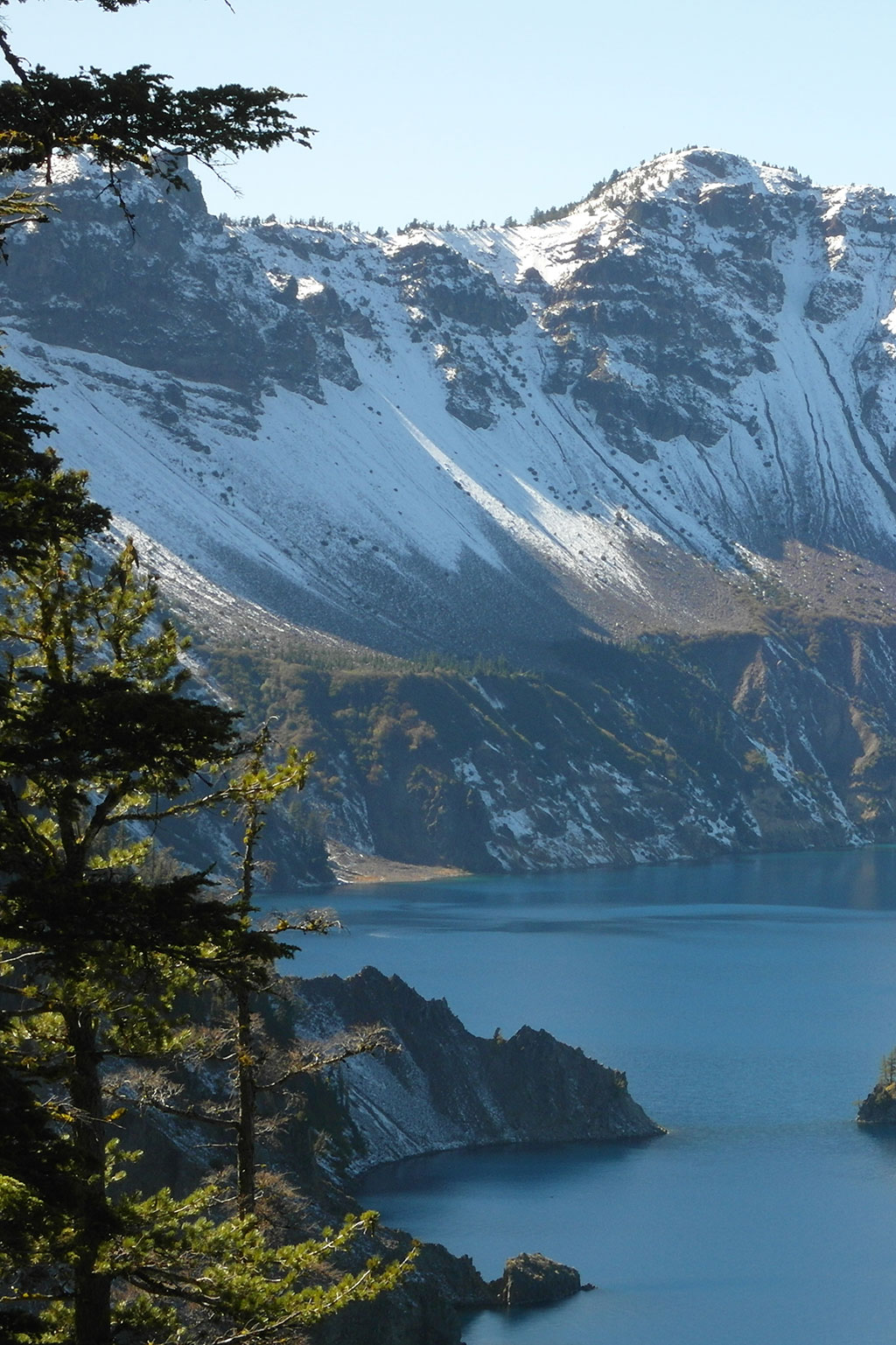
And then there are the many notable accompanying formations that jut out from within and around Crater Lake. For instance, the surrounding cliffs rise approximately 2,000 feet above the water, offering stunning views. Not to be outdone, the park’s headquarters and Rim Village destination are located even higher, at 6,500 feet and 7,100 feet, respectively. (More on the latter later.)
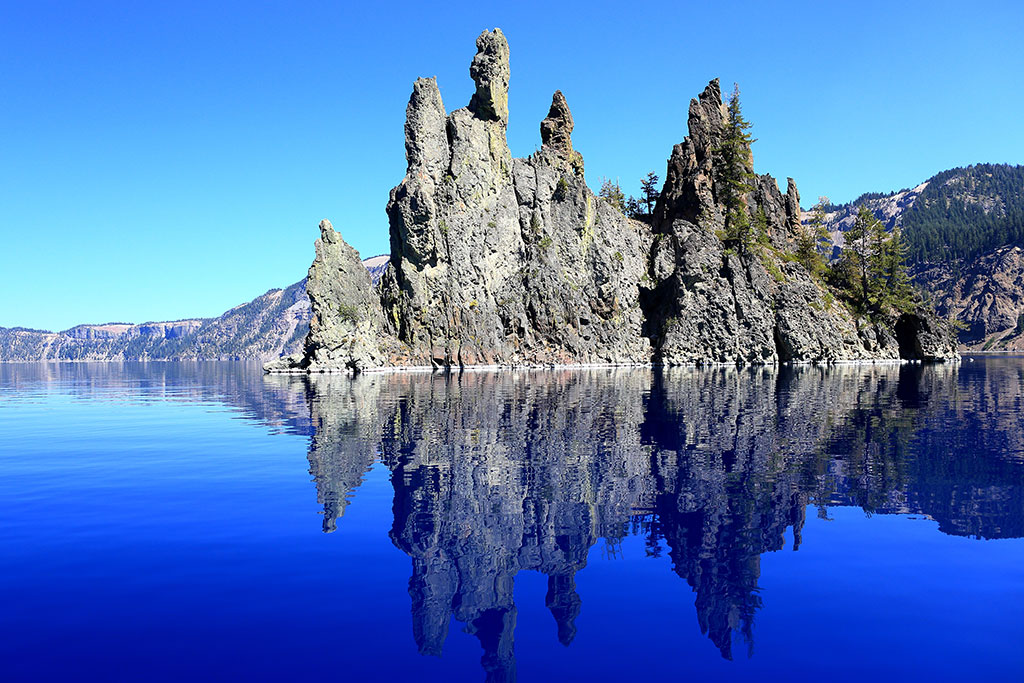
In addition, the lake boasts two islands— the Phantom Ship near the southern rim, which is estimated to be 400,000 years old, and Wizard Island by the western shore, which is larger than its counterpart but mostly underwater. Lastly, offshore has its gems as well. The pinnacles, shard-like volcanic remnants formed from the original eruption’s ash formations, are a must-see to the southeast; you can view them from a dedicated overlook or take the trailhead for an up-close exploration.

Perusing the park
Encompassing over 180,000 acres, Crater Lake National Park allows for ample outdoor adventures, from serenely fishing for rainbow trout and salmon to camping under the evergreen trees to backpacking any of the ninety miles of hiking trails. But don’t let the latter intimidate you; featuring moderate jaunts of a few miles, strenuous backcountry outings of up to thirty miles, and everything in between, there’s something for every activity level. Along the way, keep an eye out for numerous wildlife, such as varieties of squirrels, deer, hares, and even adorable pika. Bird-watching is also prevalent throughout the park, with over 250 species having been observed.
If you prefer a somewhat more laid-back experience, there are several fantastic options at your fingertips. For instance, the thirty-three-mile Rim Drive tour around the caldera is the ultimate comprehensive sightseeing adventure, boasting thirty overlooks to take in different views of the lake, rock formations, waterfalls, and other natural features. And once night falls, be sure to look skyward—the stargazing is amazing due to the park’s size and relative isolation.
Also worth exploring is Rim Village, an all-in-one stop of sorts that offers history, lodging, dining, and more. It was established as a year-round hub for park visitors in 1948 and added to the National Register of Historic Places in 1997. Among the possibilities here include a self-guided walking tour to see the various historic buildings and sites along with the most popular attraction, the Sinnott Memorial Overlook. Typically open through mid-October, the spot features exhibits about the area’s history as well as arguably the best view of the lake from its covered observation deck. And make sure to visit the Rim Village café and gift shop to get some food and drinks and purchase take-home mementos of your vacation.

Planning for your trip
Weather conditions at Crater Lake often change at the drop of a hat in fall. October’s typical highs are in the low 50s, yet the area also averages twenty-one inches of snow that month (and over forty feet per year). November then unofficially ushers in the winter season, meaning you can only expect more such chilly weather.
So it’s clearly vital to plan your trek intentionally. Pack for warmth during this time frame, and call the park’s visitor center for the most up-to-date conditions and road closures. Note, for instance, that both the North Entrance and Rim Drive are shut down for the season come November 1 at the latest (earlier if conditions require).
As far as accommodations go, consider booking a room at 110-year-old Crater Lake Lodge, a popular destination that offers dining and an unbeatable back-porch view of the water. It is open through mid-October, and reservations are available a year in advance. A more rustic park option is staying at the Cabins at Mazama Village or its adjacent campground, both of which are set in a forest 6,000 feet high and are available through mid-September.
Speaking of the outskirts, they may beckon you with their own attractions. For exciting urban experiences, the picturesque city of Klamath Falls—along with its adventurous zip-line park—is less than an hour’s drive, while Bend offers art, culture, shopping, and more outdoor adventures approximately two hours away. But perhaps most alluring is hitting Eastern Lake County, a.k.a. the Oregon Outback, for once-in-a-lifetime celestial viewing. Though 175 miles away, it may be well worth the journey—as part of the largest contiguous dark-sky zone in the United States, it’s even more awe-inspiring than Crater Lake at night.
After autumn
If you can’t make it to Crater Lake National Park during fall, don’t discount taking a trip during winter: the enchanting snowy tapestry can be breathtaking at the lake, which hasn’t frozen in over seventy-five years. Among the exciting cold-weather outdoor options are snowshoeing (including ranger-guided walks), skiing, and sledding. You can often enjoy frosted mountains through spring as well, or consider waiting until the busy summer season from July through September for maximum warmth. Ultimately, though, no matter when you choose to visit, you’ll find so much to experience at this slice of heaven in the Beaver State.
For more info, visit nps.gov/crla or explorecraterlake.com
963 Views
Related Posts



Popular Posts